Mushroom Extract Supplier: What Supplement Manufacturers Should Know
The demand for functional mushroom ingredients continues to attract attention across the nutraceutical, dietary supplement, and functional food industries. From capsules and powders to gummies, beverage mixes, and specialized nutritional formulations, mushroom-derived ingredients offer manufacturers a versatile range of formulation opportunities.
For supplement brands and product developers, selecting the right mushroom extract supplier is an important step in developing consistent, market-ready products. Beyond the ingredient name, purchasing decisions often depend on extract specifications, raw material traceability, quality documentation, manufacturing capabilities, and supply reliability.
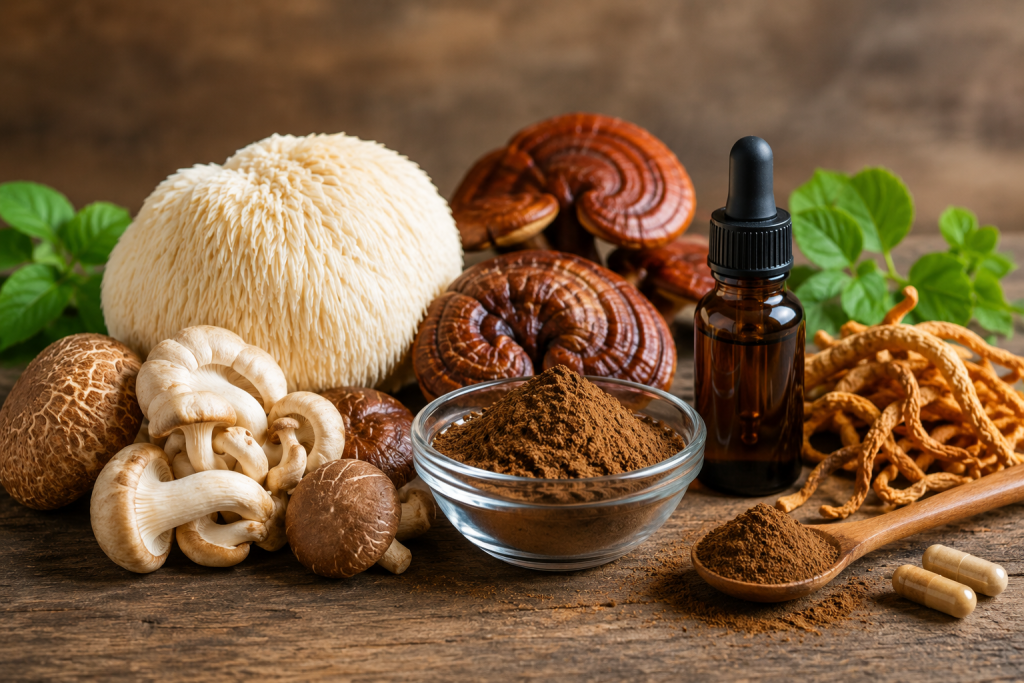
Mushrooms such as Lion’s Mane, Reishi, Chaga, Shiitake, and Turkey Tail are widely used in functional ingredient applications. However, different species, extraction methods, and product specifications can result in substantially different ingredient profiles.
This guide explores the mushroom extracts commonly used in supplement development, the factors that matter when sourcing bulk ingredients, and how manufacturers can evaluate potential suppliers.
What Are Mushroom Extracts?
Mushroom extracts are ingredients produced by processing selected mushroom materials to obtain particular constituents or concentrated fractions. Depending on the species and manufacturing process, these ingredients may be supplied as powders, liquid extracts, or standardized preparations.
Compared with whole mushroom powders, extracts may be manufactured to achieve a particular concentration, composition, or specification. The exact characteristics depend on the raw material, extraction process, and quality requirements.
For nutraceutical manufacturers, understanding these differences is essential when choosing ingredients for a new product or maintaining consistency across existing formulations.
Mushroom extracts may be incorporated into:
- Dietary supplement capsules and tablets
- Functional beverage powders
- Nutritional blends and powdered drink mixes
- Gummies and other supplement formats
- Functional food applications
- Custom nutraceutical formulations
The appropriate ingredient depends on the intended application, formulation requirements, applicable regulations, and desired product characteristics.
Popular Mushroom Extracts for Nutraceutical Formulations
Different mushroom species offer distinct ingredient characteristics and commercial applications. Manufacturers should evaluate each option according to its intended use and available technical specifications.
1. Lion’s Mane Extract
Lion’s Mane (Hericium erinaceus) is a functional mushroom widely discussed in the cognitive wellness and brain-health supplement categories.
It is used in various supplement formats, including capsules, powders, and multi-ingredient blends.
When sourcing Lion’s Mane extract, manufacturers should review the declared mushroom species, source material, extraction method, extract ratio where applicable, and available analytical documentation.
Potential applications: Cognitive wellness formulations, functional mushroom blends, and specialty dietary supplements.
2. Reishi Extract
Reishi (Ganoderma lucidum) is a well-known mushroom used in traditional practices and contemporary functional ingredient products.
Reishi extracts are available in different specifications depending on the manufacturing process and intended application. Buyers should establish whether the product is intended to provide a particular constituent profile and verify that the specification is supported by appropriate testing.
Potential applications: Functional mushroom supplements, wellness blends, capsules, and powdered formulations.
3. Chaga Extract
Chaga (Inonotus obliquus) is used in functional ingredient applications and is often associated with products positioned around antioxidant-related wellness concepts.
Its composition may vary depending on raw material origin, processing, and extraction conditions. Manufacturers should evaluate identity, purity, contaminant testing, and the suitability of the ingredient for their intended product.
Potential applications: Functional beverage powders, mushroom blends, and dietary supplement formulations.
4. Turkey Tail Extract
Turkey Tail (Trametes versicolor) is a functional mushroom recognized for its polysaccharide-containing composition.
The characteristics of a Turkey Tail ingredient depend on the material used and its processing. Buyers should pay particular attention to ingredient identity and the analytical methods used to support any declared specifications.
Potential applications: Specialty mushroom supplements, powdered blends, and research-led nutraceutical formulations.
5. Shiitake Extract
Shiitake (Lentinula edodes) is an edible mushroom used in food products and functional ingredient applications.
Depending on the product specification, Shiitake-derived ingredients may be suitable for supplement blends and selected food applications.
Potential applications: Functional food ingredients, mushroom complexes, and nutritional supplement formulations.
6. Golden Oyster Mushroom Extract
Golden Oyster Mushroom (Pleurotus citrinopileatus) is another mushroom species that may be considered for specialized functional ingredient products.
Manufacturers evaluating this ingredient should confirm its identity, availability, formulation compatibility, and supporting quality documentation with their supplier.
Potential applications: Specialty mushroom blends and differentiated functional ingredient products.
How to Choose the Right Mushroom Extract Supplier
Selecting a supplier involves more than comparing prices. Ingredient specifications, quality controls, documentation, and long-term sourcing capabilities can influence both product development and manufacturing efficiency.
1. Verify Ingredient Identity and Specifications
A reliable sourcing process begins with clear ingredient identification.
Before placing a bulk order, request the technical specification sheet and confirm details such as:
- Scientific name and species identity
- Part or material of the mushroom used
- Extract type and manufacturing method
- Declared extract ratio, if applicable
- Active or characteristic constituent specifications, where relevant
- Appearance, solubility, and other applicable physical characteristics
- Storage conditions and shelf life
Not every mushroom extract has the same standardization requirements. Specifications should reflect the particular ingredient rather than relying on a generic description.
2. Review Quality Assurance Procedures
Quality assurance is an important consideration when purchasing nutraceutical ingredients.
Depending on the ingredient and intended market, relevant documentation may include a Certificate of Analysis (COA), product specification sheet, Safety Data Sheet (SDS), and applicable manufacturing or quality certifications.
Ask about testing procedures for:
- Identity and authenticity
- Microbiological quality
- Heavy metals
- Pesticide residues, where relevant
- Other contaminants identified through the product risk assessment
- Compliance with applicable ingredient and market requirements
Review whether the documentation relates to the actual product specification and whether testing is conducted using appropriate analytical methods.
3. Understand the Extraction Process
Extraction methods can influence an ingredient’s composition, physical properties, and suitability for different formulations.
Depending on the mushroom and desired specification, processing may involve hot-water extraction, ethanol extraction, or other suitable methods.
Some products use a single extraction method, while others use multiple processing stages. The best approach depends on the intended constituent profile and application.
Manufacturers should ask suppliers to explain the process at an appropriate technical level and verify that the finished ingredient meets the agreed specifications.
Avoid comparing extracts solely by extract ratio. A stated ratio does not, by itself, establish purity, potency, or equivalent composition across different suppliers.
4. Assess Traceability and Raw Material Sourcing
Traceability helps manufacturers understand where ingredients originate and how they move through the supply chain.
Ask prospective suppliers about raw material sourcing, batch identification, supplier qualification, and documentation practices.
For ingredients intended for regulated markets, also review the relevant requirements for manufacturing, importation, labeling, and product registration.
Clear traceability can help support supplier qualification, quality investigations, and consistent procurement.
5. Evaluate Bulk Supply Capabilities
For supplement manufacturers, purchasing a suitable ingredient is only part of the sourcing decision. The supplier must also be able to support commercial requirements.
Important considerations include:
- Available pack sizes and minimum order quantities
- Sample availability for product development
- Lead times and production capacity
- Batch-to-batch consistency
- Packaging and storage requirements
- Export documentation and shipping arrangements
- Communication and technical support
For ongoing production, discuss expected annual demand and forecast requirements early in the supplier evaluation process.
Mushroom Extracts vs. Mushroom Powders: What Is the Difference?
Mushroom powders and mushroom extracts serve different formulation purposes.
Whole mushroom powders are generally produced by drying and milling mushroom material. Extracts undergo additional processing intended to obtain a particular composition or concentration.
| Consideration | Mushroom Powder | Mushroom Extract |
|---|---|---|
| Processing | Drying and milling, depending on the product | Additional extraction and processing |
| Composition | Reflects the processed mushroom material | Depends on the extraction method and specification |
| Standardization | May be available, depending on the product | May be standardized to specified constituents |
| Formulation considerations | Particle size, flavor, color, and dispersibility | Solubility, concentration, composition, and processing compatibility |
| Purchasing decision | Based on material identity and application | Based on extract specifications and intended application |
Neither format is automatically superior for every product. The right choice depends on the formulation, desired ingredient characteristics, budget, and product positioning.
Manufacturers should compare the actual specifications and cost per intended serving rather than relying only on price per kilogram.
What Documentation Should You Request Before Buying Bulk Mushroom Extracts?
Before approving a supplier, establish a documentation checklist that reflects your product and market requirements.
Common documents to request include:
Certificate of Analysis (COA): Provides batch-specific analytical results against the relevant specifications.
Technical Data Sheet: Describes ingredient characteristics, specifications, and recommended handling information.
Safety Data Sheet (SDS): Provides applicable safety, handling, and storage information.
Manufacturing and quality documentation: May include relevant certifications, audit information, or evidence of quality management practices.
Regulatory and traceability documents: May include origin information, allergen statements, country-of-origin details, or other documents required for the destination market.
The precise requirements vary by ingredient, application, and jurisdiction. Buyers should verify the documentation rather than assuming that every supplier provides equivalent evidence.
Key Considerations for Mushroom Extract Formulation
Choosing a suitable ingredient early in product development can help reduce formulation changes later.
Solubility and Dispersibility
For beverages and powdered mixes, determine how the extract behaves in the intended formulation. Color, sedimentation, taste, and dispersibility may affect the finished product.
Flavor and Aroma
Some mushroom extracts have distinctive earthy, bitter, or roasted notes. Formulation trials can help establish whether flavor masking or blending is necessary.
Stability and Storage
Temperature, moisture, light, oxygen exposure, and packaging may influence ingredient stability. Follow the supplier’s documented storage and handling recommendations.
Ingredient Compatibility
Evaluate how the mushroom extract interacts with other ingredients in a blend. Pilot batches can help identify challenges involving texture, flow, solubility, or finished-product stability.
Regulatory Suitability
Confirm that the ingredient, its intended use, and any proposed labeling claims are permitted in the target market. Scientific evidence and regulatory requirements should guide product claims; traditional use or ingredient popularity alone does not establish a health benefit.
Why Work With an Experienced Nutraceutical Ingredient Supplier?
A capable ingredient supplier can help streamline the sourcing process by providing clear specifications, quality documentation, product information, and communication throughout procurement.
For manufacturers managing multiple formulations, a dependable supplier relationship can also simplify sample evaluation, batch documentation, production planning, and repeat ordering.
When comparing suppliers, evaluate the complete offering: ingredient suitability, quality systems, documentation, commercial terms, and supply reliability.
The objective is not simply to purchase a mushroom extract at the lowest price. It is to source an ingredient that consistently meets your product requirements.
Frequently Asked Questions
1. What should I look for in a mushroom extract supplier?
Look for clear ingredient specifications, appropriate quality testing, batch-specific documentation, traceability, reliable supply capabilities, and transparent commercial terms. Confirm that the supplier can support the requirements of your intended application and market.
2. Which mushroom extracts are commonly used in dietary supplements?
Commonly used options include Lion’s Mane, Reishi, Chaga, Turkey Tail, and Shiitake. The best ingredient depends on the intended formulation, specification, and product positioning.
3. Can I purchase mushroom extracts in bulk?
Bulk purchasing options vary by supplier, ingredient, and specification. Contact the supplier to confirm available quantities, minimum order requirements, lead times, packaging, and sample availability.
4. What is the difference between a mushroom extract and a mushroom powder?
A mushroom powder is generally dried and milled mushroom material, while an extract undergoes additional processing to obtain a particular composition or concentration. Actual characteristics depend on the manufacturing process and product specifications.
5. Why is a Certificate of Analysis important?
A COA provides analytical results for a particular batch against specified quality parameters. Buyers should review the results, test methods, acceptance criteria, and issuing laboratory information as appropriate.
6. Are all mushroom extracts standardized?
No. Standardization depends on the ingredient, manufacturing process, and product requirements. Buyers should confirm which constituents, if any, are standardized and how the stated values are verified.
7. How do I request a quote for bulk mushroom extracts?
Provide the mushroom species, required specification, intended application, estimated quantity, destination market, and any documentation requirements. This information helps the supplier evaluate suitability and prepare an appropriate quotation.
Source Mushroom Extract Ingredients With Blue Star Global
Sourcing the right functional mushroom ingredient starts with understanding your formulation requirements and establishing clear quality specifications.
Blue Star Corp supports nutraceutical ingredient sourcing for businesses seeking ingredients for dietary supplements and related applications.
Explore our Mushroom Extracts category to learn more about available ingredients, including Lion’s Mane, Reishi, Chaga, Turkey Tail, Golden Oyster Mushroom, and Shiitake.
Whether you are developing a new functional mushroom supplement or evaluating ingredients for an existing product line, our team can help you discuss your sourcing requirements.
Looking for bulk mushroom extracts for your next formulation?
Request Pricing from Blue Star Global
Contact our team to discuss ingredient specifications, quantities, documentation, and availability.
Mushroom Extract Supplier